
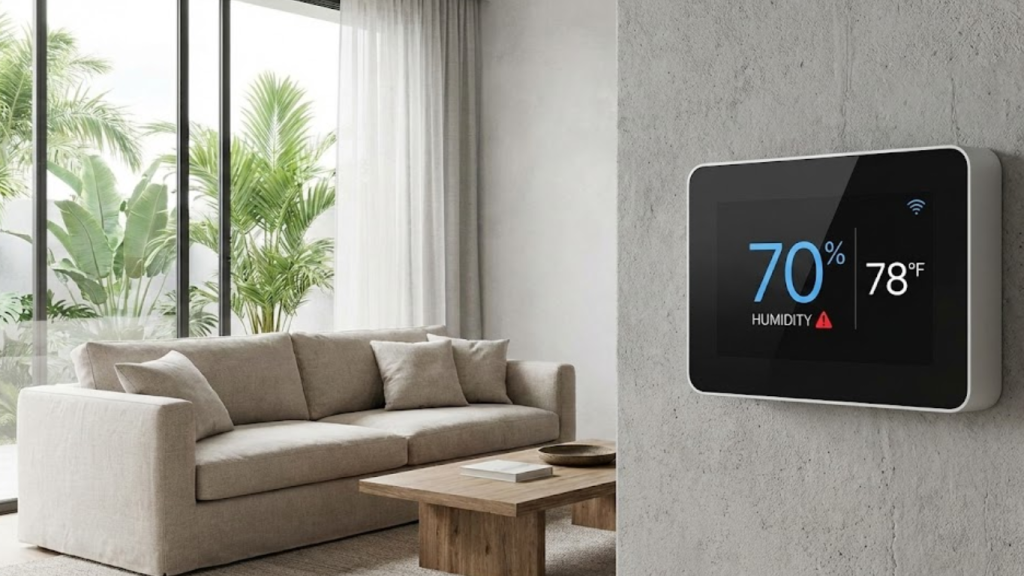
Your thermostat says 78 degrees.
You lower the temperature.
The air conditioner turns on, and you hear it running—but the house doesn’t seem to get any cooler.
Sound familiar?
An AC system that runs without adequately cooling the home can be especially frustrating during hot weather. It can also be difficult for homeowners to determine what’s wrong because several different problems can produce similar symptoms.
Some causes are relatively simple. Others require professional diagnosis and repair.
Understanding the possibilities can help you know what to check yourself and when it’s time to call an HVAC technician.
Start With Your Thermostat
Before assuming there’s a major equipment problem, check your thermostat.
Make sure it is:
- Set to cooling mode
- Set below the current indoor temperature
- Displaying normally
- Not accidentally set to fan-only operation
If your thermostat uses batteries, weak batteries may also cause issues depending on the model.
Location matters too.
The U.S. Department of Energy advises homeowners to avoid placing heat-producing devices such as lamps or televisions near thermostats because the additional heat can cause the air conditioner to run longer than necessary.
If the thermostat appears to be working correctly but the house still isn’t cooling, continue investigating.
Check the Air Filter
A dirty air filter is one of the first things homeowners should check when experiencing poor AC performance.
Filters capture particles as air circulates through the system. Over time, they can become dirty enough to restrict airflow.
Reduced airflow may make it more difficult for the air conditioning system to cool the home effectively.
The U.S. Department of Energy notes that clogged filters restrict airflow and reduce an air conditioner’s efficiency and ability to cool effectively. DOE guidance also states that routinely cleaning or replacing filters can lower an air conditioner’s energy consumption by approximately 5% to 15%.
Check the filter according to the manufacturer’s recommendations and replace or clean it when appropriate.
Make Sure the Outdoor Unit Has Airflow
Your outdoor AC equipment needs room to release heat.
Leaves, grass, vegetation, and other debris can accumulate around the unit and interfere with normal airflow.
From a safe distance, visually inspect the area.
Keep vegetation and debris from crowding the equipment, but don’t disassemble or attempt internal repairs yourself.
If the equipment appears damaged or isn’t operating normally, professional evaluation is appropriate.
If your system continues running without providing enough cooling, visit our Services page to learn more about Fast AC Repair’s professional air conditioning repair, maintenance, installation, troubleshooting, and HVAC solutions.
Dirty Coils Can Affect Cooling Performance
Air conditioners rely on coils to transfer heat.
The evaporator coil helps remove heat from indoor air, while the outdoor condenser releases collected heat outside.
When coils become excessively dirty, the heat-transfer process can become less effective.
Some basic exterior cleaning and maintenance may be homeowner-friendly, but deeper coil problems should generally be handled by trained HVAC professionals.
Your AC May Have a Refrigerant Problem
Refrigerant plays a critical role in the cooling process.
If refrigerant levels are incorrect because of a leak or another system issue, the air conditioner may struggle to cool the home properly.
This isn’t a problem homeowners should attempt to solve by simply “adding refrigerant.”
According to the Department of Energy, low refrigerant can be associated with leakage, and a trained technician should repair the leak and properly service the system.
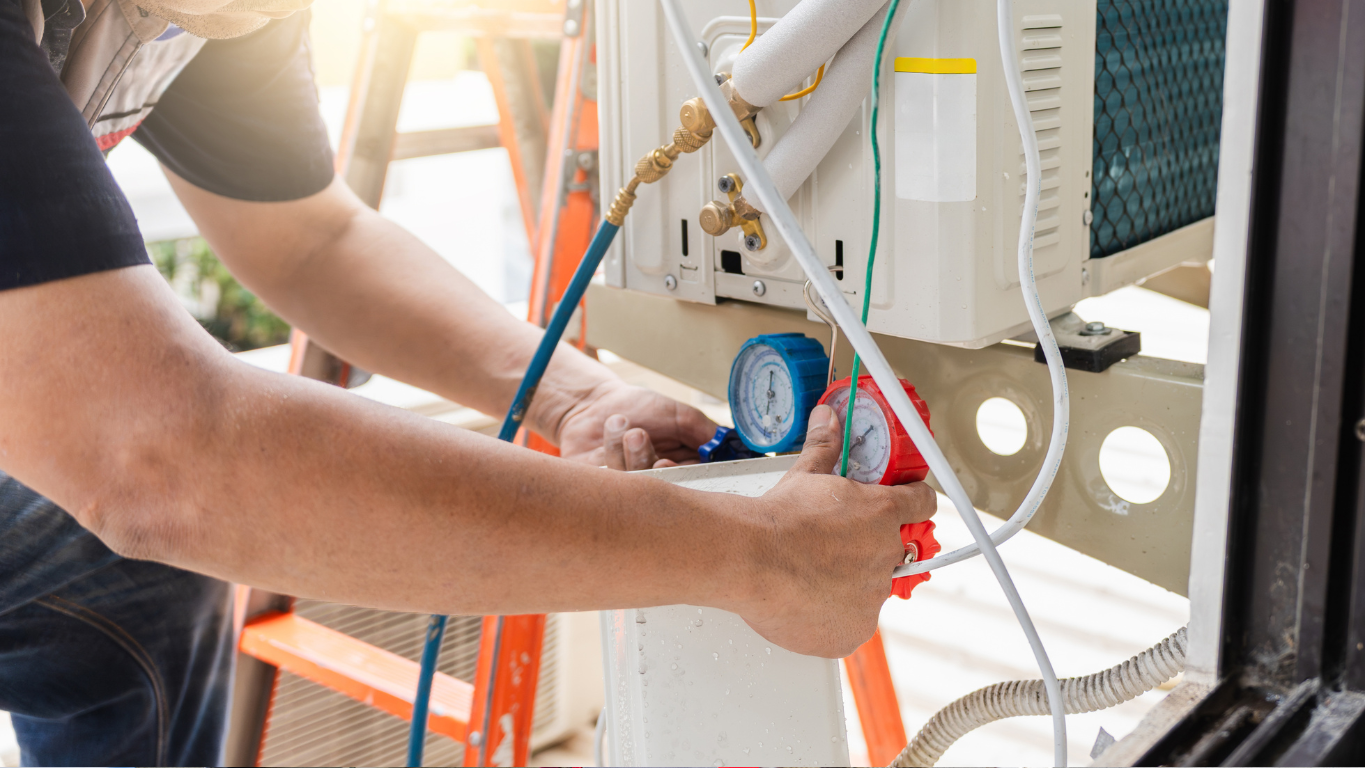
If you suspect a refrigerant problem, schedule professional service.
Ductwork Could Be Losing Cooled Air
Sometimes the AC equipment itself isn’t the primary problem.
Your system may be producing cooled air, but that air isn’t reaching the rooms efficiently.
Depending on the home’s configuration, ductwork can run through attics, crawl spaces, garages, and other unconditioned areas.
Leaks or damaged connections may allow conditioned air to escape before reaching the intended rooms.
Warning signs could include:
- Certain rooms staying warmer than others
- Weak airflow from some vents
- Unusually long cooling cycles
- Visible damaged ductwork
DOE recommends sealing ducts and ensuring they are properly connected, as duct problems can contribute to substantial heating and cooling losses.Professional HVAC technicians can evaluate whether ductwork is contributing to uneven or inadequate cooling.
A Clogged Condensate Drain Can Cause Problems
Air conditioning doesn’t only reduce indoor temperature. It also removes moisture from the air.
That moisture needs somewhere to go.
Condensate drains help move collected water away from the system. If drainage becomes blocked, some systems may shut down or experience performance problems.
If you’re uncomfortable inspecting the drainage system yourself, have an HVAC professional evaluate it.
Your System May Be Too Small for the Home
Air conditioner sizing matters.
A system needs sufficient capacity for the property while also being appropriately matched to factors such as the home’s size, insulation, windows, orientation, and climate.
An undersized system may struggle during periods of high cooling demand.
However, homeowners shouldn’t assume that continuous operation automatically means the unit is too small.
Dirty filters, duct problems, refrigerant issues, equipment failures, and unusually extreme outdoor temperatures can produce similar symptoms.
A professional assessment can help identify the actual cause.
Bigger Isn’t Automatically Better
If your current AC struggles to cool your home, replacing it with the largest available system isn’t necessarily the solution.
Oversized equipment can create its own performance concerns.
Proper HVAC sizing should be based on the characteristics of the property rather than simply choosing a larger tonnage.
If replacement becomes necessary, an experienced HVAC professional can evaluate the home and recommend equipment appropriate for the cooling requirements.
To learn more about our approach to dependable air conditioning service and customer care, visit our About Us page and discover how Fast AC Repair helps homeowners address cooling problems with professional HVAC solutions.
Your Air Conditioner May Simply Need Professional Maintenance
Cooling systems contain numerous components that work together.
A maintenance visit may include evaluating areas such as:
- Filters
- Coils
- Electrical components
- Refrigerant-related performance
- Drainage
- Thermostat operation
- Overall system condition
Routine professional maintenance can also provide an opportunity to identify developing problems before they turn into unexpected breakdowns.
When Should You Call an AC Technician?
Some troubleshooting steps are simple enough for homeowners, such as checking the thermostat or replacing an appropriate filter.
Other problems require professional attention.
Consider scheduling service if:
- The AC runs but doesn’t cool
- Airflow is unusually weak
- The system repeatedly shuts down
- Ice develops around equipment
- You hear unusual noises
- You notice unusual odors
- The breaker repeatedly trips
- Cooling performance suddenly declines
Repeatedly resetting breakers or continuing to operate malfunctioning equipment isn’t a substitute for diagnosing the underlying problem.
Don’t Ignore Rising Energy Bills
A noticeable increase in electricity use can sometimes provide another clue that your cooling system deserves attention.
Air conditioning equipment that operates longer than necessary may consume additional energy.
The cause could involve the AC system itself or other aspects of the home, including insulation, air leakage, or ductwork.
According to the U.S. Department of Energy, heating and cooling are major contributors to household energy consumption, and combining equipment maintenance with measures such as insulation, air sealing, and appropriate thermostat settings can reduce heating and cooling energy use.
Consider the Age and Condition of the System
Repair isn’t always the only option.
If an air conditioner is older and experiencing repeated breakdowns, homeowners may eventually need to compare the cost of continued repairs with replacement.
Factors worth considering include:
- Equipment age
- Frequency of repairs
- Repair cost
- Cooling performance
- Energy efficiency
- Overall condition
A professional HVAC technician can help explain the condition of the existing system so you can make a more informed decision.
Local HVAC Service Matters When Your AC Stops Cooling
When temperatures are high, a poorly performing air conditioner can quickly make a home uncomfortable.
Having access to dependable local service can make troubleshooting and repairs easier.
If your AC is struggling and you need professional help in your community, visit our Service Areas page to see where Fast AC Repair provides air conditioning repair, maintenance, installation, and HVAC services.
Don’t Wait Until the System Stops Completely
An air conditioner doesn’t necessarily need to stop running before it needs service.
Poor cooling, unusually long cycles, weak airflow, strange noises, and unexplained changes in performance can all be reasons to investigate.
Addressing a developing issue early may help prevent additional stress on the equipment and reduce the chance of being left without cooling when you need it most.
Start with the basics: check your thermostat, inspect your filter, and make sure the outdoor equipment isn’t surrounded by debris.
If those simple steps don’t solve the problem, bring in a professional.
Get Your Home Cooling Properly Again
An air conditioner that runs all day without keeping your home comfortable shouldn’t be ignored.
At Fast AC Repair, we help homeowners diagnose cooling problems and determine the right solution for their HVAC systems. Whether you’re dealing with weak airflow, inadequate cooling, thermostat problems, maintenance concerns, or an unexpected AC breakdown, professional diagnosis can help identify what’s actually causing the problem instead of relying on guesswork.
From routine maintenance and troubleshooting to repairs and system replacement, we’re here to help keep your home comfortable when temperatures climb.
Contact Fast AC Repair today to schedule professional AC service, restore your home’s comfort, and make sure your cooling system is ready to perform when you need it most.