
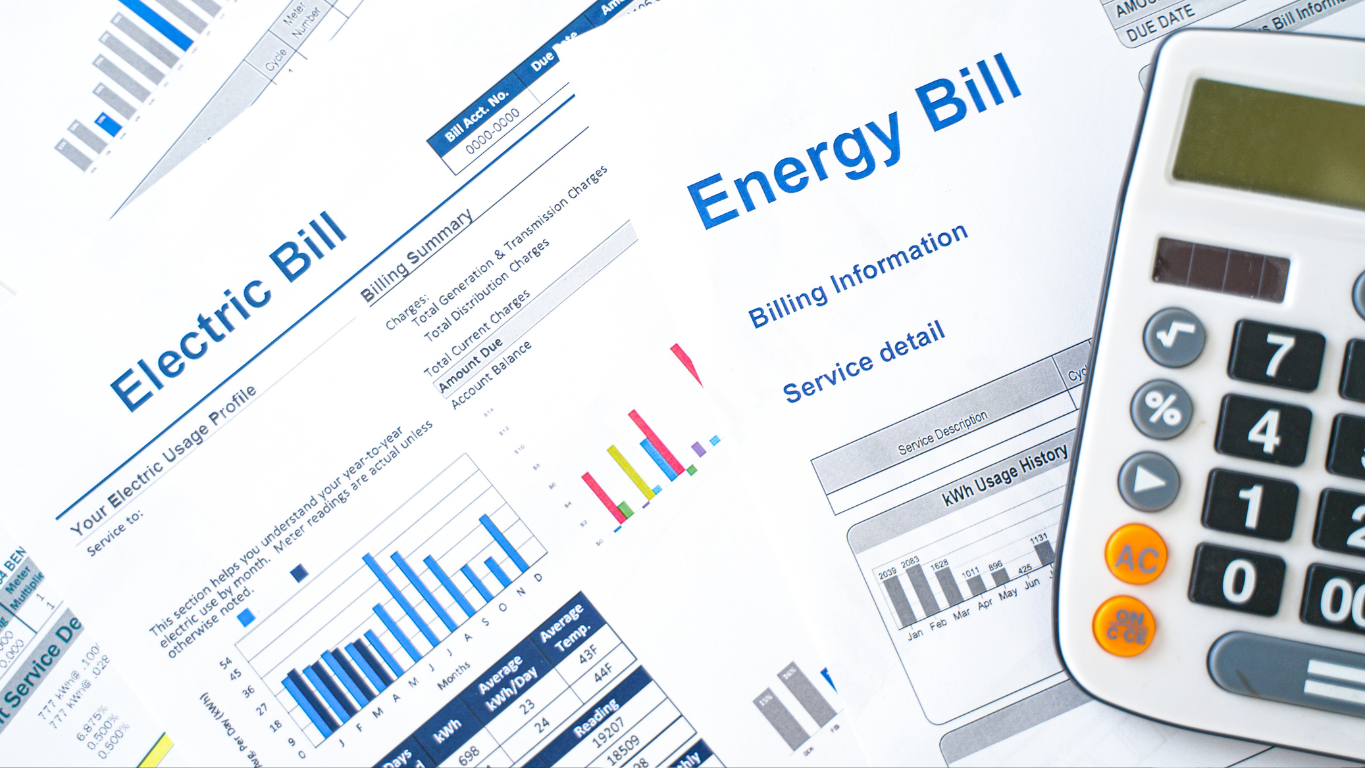
You open your electric bill, expecting the usual amount, and your jaw drops. It’s double what it was last month. You scan the usage graph, confused. You haven’t changed your habits, you haven’t left the lights on, and you certainly haven’t installed a new hot tub.
So, who is the culprit? In 90% of cases here in our local climate, the “energy thief” is your air conditioner.
Your A/C system accounts for the vast majority of your home’s energy consumption. When it starts to fail, it doesn’t always stop working immediately; often, it just starts “eating” more electricity to do the same job.
As the area’s trusted HVAC experts, Fast Air Conditioning Repair knows that a sudden spike in energy costs is rarely a mistake by the utility company. It is a warning sign from your A/C system. This expert guide explains why your unit is working overtime and how to stop it from draining your wallet.
The “Suffocation” Effect: Dirty Filters and Coils
The most common reason for a high bill is simply a lack of airflow. Your A/C works by pulling warm air through a filter and over a cold coil to remove heat.
- The Problem: If your filter is clogged with dust and pet hair, or your outdoor condenser coil is caked in dirt, pollen, and grass clippings, the system literally suffocates.
- The Cost: To compensate, the blower motor has to work twice as hard to pull air through the blockage. Furthermore, the system has to run for longer cycles to achieve the same temperature. A dirty system can use 30% more electricity than a clean one just to maintain the same comfort level.
- The Fix: Change your filter every 30-60 days. If the outdoor unit is dirty, it needs a professional chemical cleaning, not just a hose-down.

You Might Be Cooling Your Attic (Duct Leaks)
Your ductwork is the highway system for your cold air. But in many homes, especially older ones, that highway has potholes.
- The Leak: Over time, the mastic or tape sealing your ducts can dry out and crack, or a duct can disconnect entirely due to settling or attic work.
- The Result: You are paying to cool air, and then pumping that expensive air directly into your super-heated attic instead of your living room.
- The Sign: If your unit runs constantly but the house never feels quite cool enough—or if some rooms are hot while others are cold—you likely have a duct leak. It’s like trying to fill a bucket that has a hole in the bottom; you have to keep the water running constantly just to keep it full.
The “Short-Cycling” Energy Spike
Does your A/C turn on, run for 5 minutes, turn off, and then turn back on 5 minutes later? This is called Short-Cycling.
- Why it costs money: An A/C uses the most electricity during the “startup” phase (turning on the compressor). Once it’s running, it uses less power.
- The Analogy: It’s like driving in stop-and-go traffic versus highway cruising. Stop-and-go burns far more gas. Constant startup cycles spike your kilowatt-hour usage.
- The Cause: Short-cycling is often caused by an oversized unit, a failing capacitor, or a thermostat issue.
The “Low Refrigerant” Marathon
If your system has a small refrigerant leak, it loses its ability to absorb heat efficiently.
- The Consequence: The air coming out of your vents will feel “cool” but not “cold.” To reach your thermostat setting of 74°, the system might have to run for 4 hours straight instead of the usual 20 minutes.
- The Bill: That extra run-time translates directly to a massive electric bill. If your A/C never seems to shut off during the day, low refrigerant is a likely suspect.
The Age Factor: Old Tech Costs More
Finally, sometimes nothing is “broken,” but the technology is just obsolete.
- SEER Ratings: An A/C unit installed 15 years ago likely had a SEER rating of 10. Modern units are 16, 18, or even 20+ SEER.
- The Difference: A 10-SEER unit uses nearly double the electricity of a modern high-efficiency system to produce the same amount of cooling. If your unit is old, that high bill might just be the cost of operating vintage technology.
Stop the Energy Drain.
You shouldn’t have to choose between a comfortable home and a reasonable bank account. If your bill is high, your system is screaming for help.
At Fast Air Conditioning Repair, we don’t just fix broken parts; we optimize efficiency. We can perform an amp-draw test to see exactly how much power your components are using and identify the inefficiencies stealing your money.
We offer a Comprehensive Efficiency Inspection. We’ll check your pressures, inspect your ducts for leaks, and clean your coils to get your system running like new—and get your electric bill back down to earth.